Koh Yao Noi Food Culture: What the Island Really Eats
Food on Koh Yao Noi is not a performance: no signature dish invented for visitors, no strip of restaurants chasing the same photograph, no island-wide menu. What exists is a working food culture — a Muslim village community in southern Thailand that grows rice in its own paddies, fishes the water in front of it, fries roti in the morning and cooks the curries of the Malay-influenced south. This guide is about everyday food and where it comes from; for addresses, see the where to eat guide.
A Muslim island in southern Thailand
The island’s native community is almost entirely Muslim — the religion guide explains why and is careful about numbers, since no recent verifiable census exists. Public life follows the prayers: five daily prayers, the first before sunrise; Friday prayer is collective and some shops pause around it; Ramadan brings quiet afternoons and busy evenings. Nothing is staged for visitors. The southern table itself is sharper, more fermented and more dependent on fish than the central cuisine most visitors know from Bangkok, and here it sits alongside Malay-influenced everyday food — roti, curries, coconut.
Breakfast: chicken rice, roti and the shape of a day
Rice is there from the first meal. Khao man gai is poached chicken with rice cooked in the chicken stock, mild and clean, served with a sauce on the side. Khao mok gai is a spiced rice with chicken in the Thai-Muslim tradition of the south: yellow with turmeric, more aromatic, heavier. One is delicate, the other built on spice; neither is an island invention, and the second belongs to Muslim cooking well beyond Koh Yao Noi.
And the one that is probably the island’s most common breakfast: gai tot, fried chicken, often eaten in the morning with rice or sticky rice. That ranking is what residents describe, not a published statistic.
Roti is the other morning constant, and not a dessert gimmick: breakfast, snack and savoury meal, a flatbread served with curry sauce — roti nam geng — and eaten with a spoon. A morning stall in the village and a shop serving lunch are ordinary routine, not a stop on a tour.
The rest of the day is rice and noodles: khao tom, the rice soup eaten across Thailand; duck noodles around the rice fields; and Isan cooking — papaya salad, grilled meats, sticky rice — because people move within Thailand and kitchens follow. The local som tam korat is made with fermented fish sauce and without peanuts.
The curries cooked at home
Curry is the backbone of the household meal, and the south is where the heat comes from. Gaeng gai is a chicken curry, cooked differently from one kitchen to the next. Gaeng tai pla is the southern fish curry built on fermented fish, strongly smelling and unapologetically hot. Gaeng som is the sour one, sharpened with tamarind, usually with fish or vegetables.
Southern curries are genuinely hot, and “not spicy” is a request a kitchen may or may not honour. And not every curry contains coconut milk: the sour and fermented ones often do without, so a coconut allergy is not the same problem here as in the curries of the centre. Pastes are pounded at home or bought fresh by weight.
One word helps on a menu: nuea (เนื้อ) means meat, usually beef. It is an ingredient, not a dish, so do not expect a recipe when it stands alone.
Fish, crab, prawns and the meat that is eaten
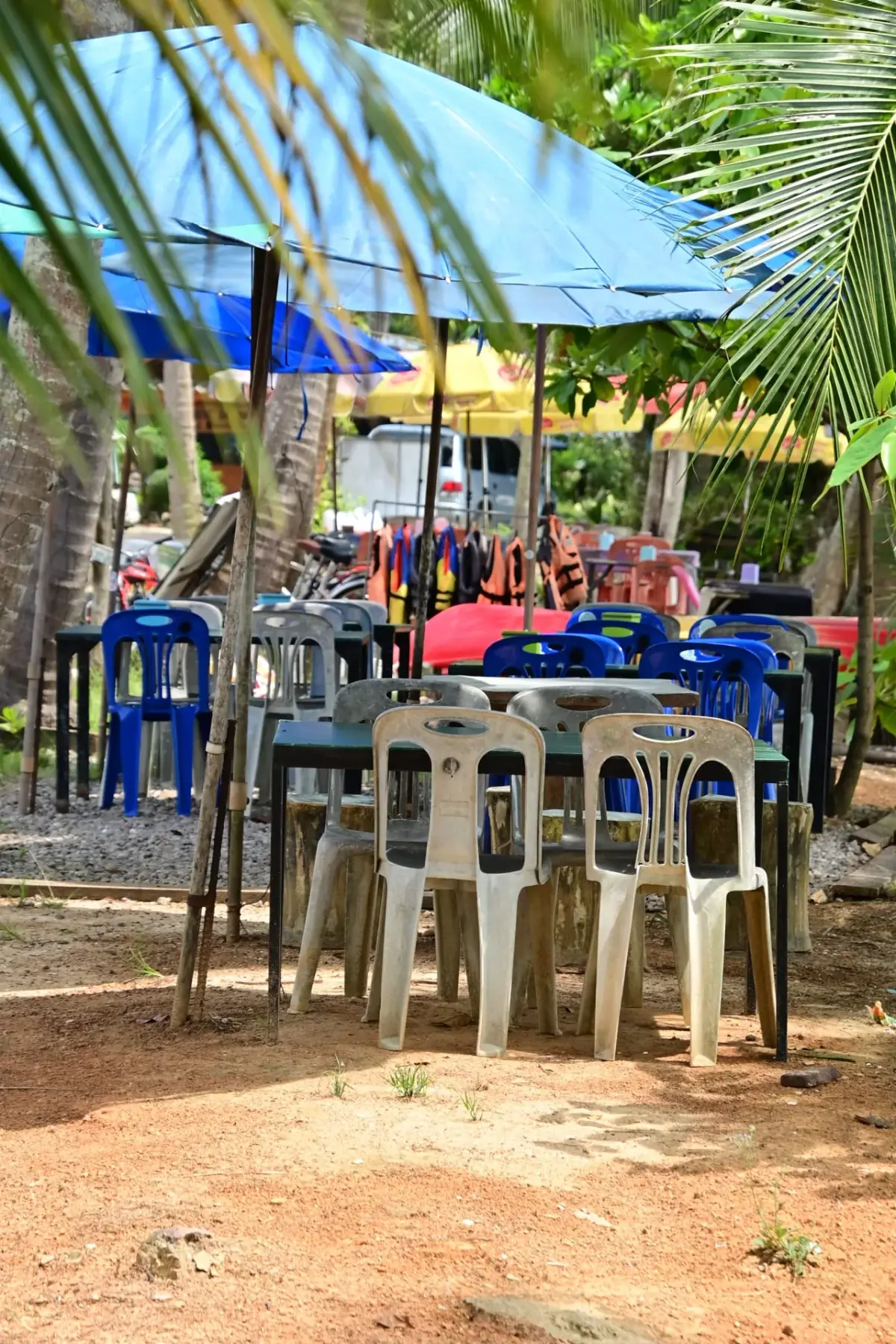
The sea is the main supplier: fish, fresh prawns and crab, often with the water in front of you — restaurants on stilts over the mangrove, tables beside a fishing canal, plates that depend on the morning’s catch rather than a printed menu.
Chicken is the everyday meat. Beef is eaten too, in smaller quantity and often lean, as local observation reports; duck is much less present than in the Chinese-influenced kitchens of other Thai towns. At some community meals, including certain nouris, goat is cooked. None of that is a statistic, and this guide publishes no figures it cannot support — and names no “famous island seafood dish”, because none is documented.
Rice: grown here, eaten from elsewhere
Koh Yao Noi grows rice in a working landscape divided between many small owners, concentrated in the Nam Chuet sector north of the main village. One crop a year, planted with the rains and harvested in late November or early December; the rice fields guide follows the cycle month by month.
Then comes the part visitors rarely expect: most of that local harvest leaves the island, and only a small quantity stays for household use after harvest. The rice actually cooked at home is usually bought locally and grown elsewhere in Thailand, often in the north. The paddies and the plate are two different stories, without contradiction — the island grows a crop and buys its daily staple.
You can still eat beside the fields: a halal restaurant next to the paddies serves a broad menu cooked to order, and the area has noodle and rice-soup kitchens used by people working there. None of the four restaurants listed there serves alcohol.
Fruit: Nakhon Si Thammarat and the trees at home
Much of the fruit sold on the island comes from Nakhon Si Thammarat, on the mainland, and arrives with the boats and the deliveries; the market’s selection follows what came in, not what the island grew. Not all the fruit bought here was grown here, and most of it was not.
What the island has is household trees: many families keep their own, mangoes above all, and eat from them at home rather than selling. Local government records list rice, rubber, coconut and cashew among the island’s crops. There is no coconut-and-cashew trail, and the island guide says what else grows on the way.
Markets and how the island actually shops
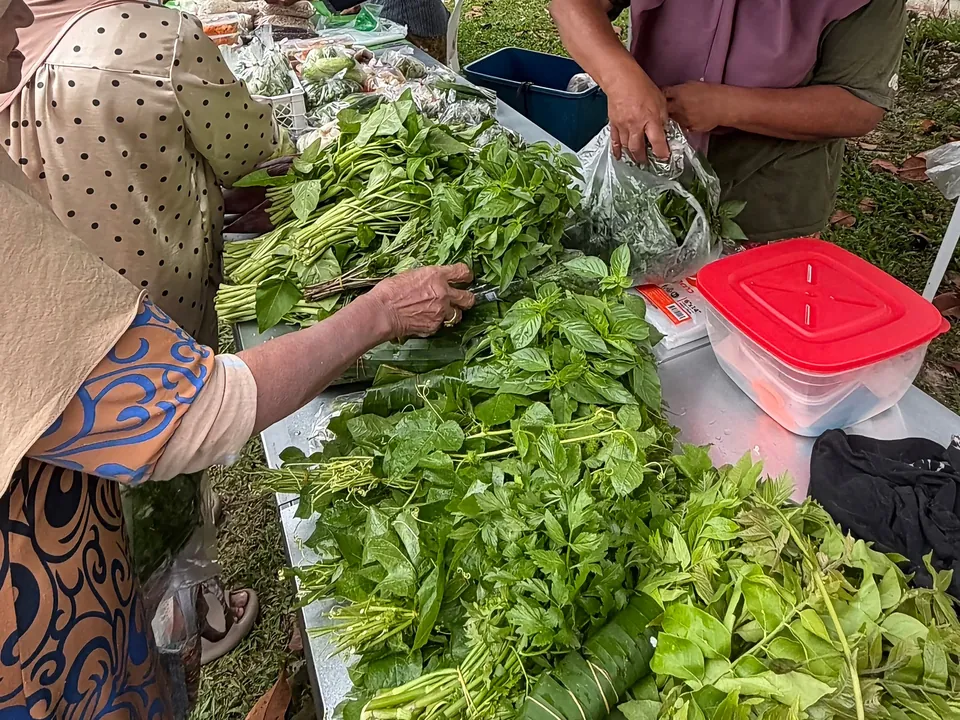
The daily fresh market in the main village is where to watch food being bought rather than served; vendors are recorded daily, morning to evening, and who is there depends on deliveries and the hour. A separate daily food market sits at Manoh Pier.
From late afternoon a small cluster of food stalls usually forms around Manoh Pier — a handful of vendors, not a large market, described in the nightlife guide. A few times a year a separate multi-day night market also sets up at Manoh, with locally announced dates. Once a week, on Wednesday morning, a small farmers’ market stands in front of the Koh Yao District Agricultural Office. Festivals bring their own food: stalls at the Tourist Season Kick-off in mid-December, street food around community events, and morning gatherings near Pasai Beach during Hari Raya.
Beyond the markets, much of how people eat never appears in public: vendors selling from home, relatives bringing produce to one another, fishers giving part of a catch. Everyday services covers the shops and the practical side of shopping.
Sharing food with neighbours
Cooking in quantity is normal, and it does not stop at the family: when a household makes a curry or a large pot, portions often go to neighbours, and the same happens with fish, fruit and celebration cakes. That circulation is one of the ordinary ways the village stays connected, and it explains a table that arrives with four dishes and no menu.
Keep the scale right: an observed practice, not a rule — families differ, and not every household does it as often. It is not a service to visitors either; if you are offered food, accept a little.
Nouri: the communal meal
The religion guide explains the nouri (also written nuri) in detail; in short it is a communal meal organised by a family, generally once a year, to which neighbours, relatives and acquaintances are invited, with food cooked in quantity and served to guests.
Both sides are real: hospitality, solidarity and the sharing of food, and a genuine social obligation, since preparing it costs money and work and not organising it exposes a family to judgement. It is a local social custom, not a universal religious obligation of Islam, and it is not a spectacle.
Ramadan, Hari Raya and the food calendar
Ramadan reshapes the day rather than closing it: the afternoon is quiet, the evening busy. Visitors are not expected to fast, but eating, drinking or smoking in the street during daylight is inconsiderate. Hari Raya brings morning gatherings and food stalls near Pasai Beach, and Eid al-Adha the sacrifice and the distribution of meat — a religious practice, not a spectacle, and not to be photographed without an explicit invitation.
Halal, alcohol and vegetarian: how to ask
Only one venue in our restaurant selection is documented as halal; everywhere else, ask. Two traps: a kitchen that serves no pork is not automatically halal, and almost every kitchen here already cooks without pork, so “no pork” tells you very little.
Alcohol is available, but some small Muslim-owned restaurants do not serve it, and several rice-field restaurants serve none. For vegetarian and vegan eating, the constraint is fish sauce and shrimp paste: explain what you avoid rather than assuming a dish is meat-free, and expect to repeat it.
Learning to cook it
Cooking classes are the most honest way in, because they show the work: curry pastes made from scratch, herbs bought locally, a technique that belongs to a household rather than a hotel menu. The cooking classes guide covers the options, and the local experiences hub lists hosts, including a chef’s table serving the dishes the south actually eats.
Eating well without turning the village into a menu
Eat at the hours people eat: chicken rice or roti in the morning, the market when it is stocked, dinner before the village goes quiet. Order what a kitchen does well. And treat a table as someone’s living: ask before photographing people or premises, keep calls short and voices low, buy something when you take up space.
Where to eat is a selection, not a ranking, and publishes no prices or ratings because they date or get invented; festivals explains the dates that move each year.
Where to go next
The religion guide explains the calendar you are eating inside and the nouri, the rice fields show where the staple comes from, and local etiquette makes the rest easy.