Accessibility and Reduced Mobility on Koh Yao Noi
Koh Yao Noi is a small island with a village road network, no pavements in most places, and beaches reached by tracks as often as by tarmac. Koh Yao Noi is broadly poorly accessible to people with reduced mobility, and particularly to wheelchair users who want to get around without assistance. This guide will not pretend otherwise. What it can do is describe what is documented, what is likely to be difficult, and what you should ask before you book.
An honest starting point
We have not certified a single accessible room, adapted bathroom, ramp, lift or reserved parking space on the island. That is not a judgement about Koh Yao Noi; it is a statement about evidence. Accessibility claims are only useful if they are specific and verified.
So read this guide as a map of constraints, not a list of accessible places. If you use a wheelchair, walk with crutches, travel with a frame, or cannot walk far in heat, the island can still work for you — but the trip will depend on where you stay, how you move, and what you confirm in advance.
What the roads are actually like
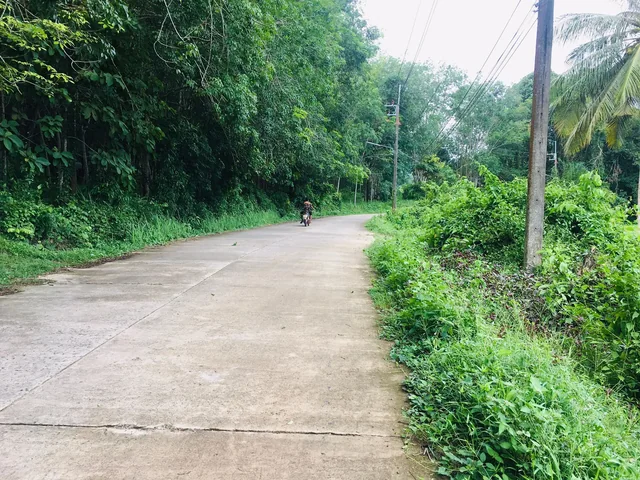
Most main links are cemented or paved, but that does not mean they are smooth. Expect repairs, uneven edges, damaged patches, sand or gravel. Smaller roads narrow, deteriorate, or continue as dirt tracks. Concrete becomes slippery in rain, mud appears on the smaller roads, and some sections are dimly lit or unlit after sunset.
Do not assume continuous pavements: on many roads there is little or no space set aside for people on foot, and walkers share the surface with scooters, pickups and cars. Two climbs are worth knowing by name — Tha Khao Hill and Six Senses Hill. Both are short and steep, and a person with a mobility aid should treat them as obstacles to route around. Heat is part of the terrain too: midday is hot, shade is uneven, and short distances take longer than the map suggests.
Moving between villages without a scooter
The main village, Baan Tha Khai, and Baan Yai next to it hold most of what a visitor needs day to day: shops, the market, the hospital, the post office. Short errands there are realistic on foot if you can manage uneven surfaces and heat. Elsewhere the island is spread out: Tha Khao is more dispersed than Pasai, and the north — Nam Chuet, Mankei, An Pao — is transport-dependent rather than walkable from the village.
There is no ride-hailing on Koh Yao Noi. No app-based service will come and collect you. Taxis exist, but none cruise the island waiting for passengers: you call, and you arrange the trip. Booking ahead is recommended, especially early morning and after sunset, and the fare is negotiated rather than metered. Songthaews normally wait at the landing points when a boat arrives; outside those windows, they are not looking for passengers.
For anyone with reduced mobility, the taxi is not a fallback but a piece of the plan. Ask your accommodation to book it, confirm the vehicle type, and confirm that the driver knows you need a few extra minutes to get in and out.
Songthaews are pickups with a covered back and a step up: getting in means climbing, and there is no lift and no ramp. Some vehicles can take a folded wheelchair or a frame in the back, with help, but that is luggage handling rather than an adapted vehicle — do not read it as accessibility.
Beaches: what access really means
Pasai is the one beach in this guide with easy roadside access: the coast road runs directly behind the sand, so a vehicle can stop close by. That does not make the sand navigable for a wheelchair, and no beach on the island is documented as having a boardwalk, matting or an accessible path to the water.
The others ask more. Klong Jark is reached from the south by a road access and, from the north, by walking along the beach when the tide allows or by unmarked landward paths. Tha Khao Bay is wide and shallow, and low tide exposes sand, shells and soft mud — beautiful, and slow going. Long Beach mixes dirt track and cement on the final approach, worse after rain. Little Long Beach has a dirt-road approach and sand with more rocks around the middle. Rock Beach Camp sits up a steep dirt road in front of An Pao Pier. Six Senses beach means leaving the vehicle and walking roughly 300 metres, and the southern access has been in poor condition for vehicles. Mankei Bay is reached by a winding, hilly road with dirt sections; Kian Bay is generally reached by boat.
Tides matter everywhere: a beach that is wide at low tide can be narrow two hours later, and some walks are possible only at low tide in both directions. Tide predictions on this site come from a reference station in Phuket, not from a measurement taken here.
Public toilets are another gap: none on the island has been confirmed as accessible, so plan around where you are staying and eating rather than assuming a stop on the way will work.
Piers, boats and boarding
Boats are the constraint no amount of planning on land can remove. Longtails and speedboats are boarded from the shore or from a simple pier, depending on the crossing and the tide, and boarding details are not field-verified for every route. Ask the operator how boarding works at both ends, how many steps there are, whether the boat has a roof and whether anyone can help with a frame or a chair. A vague answer is information too.
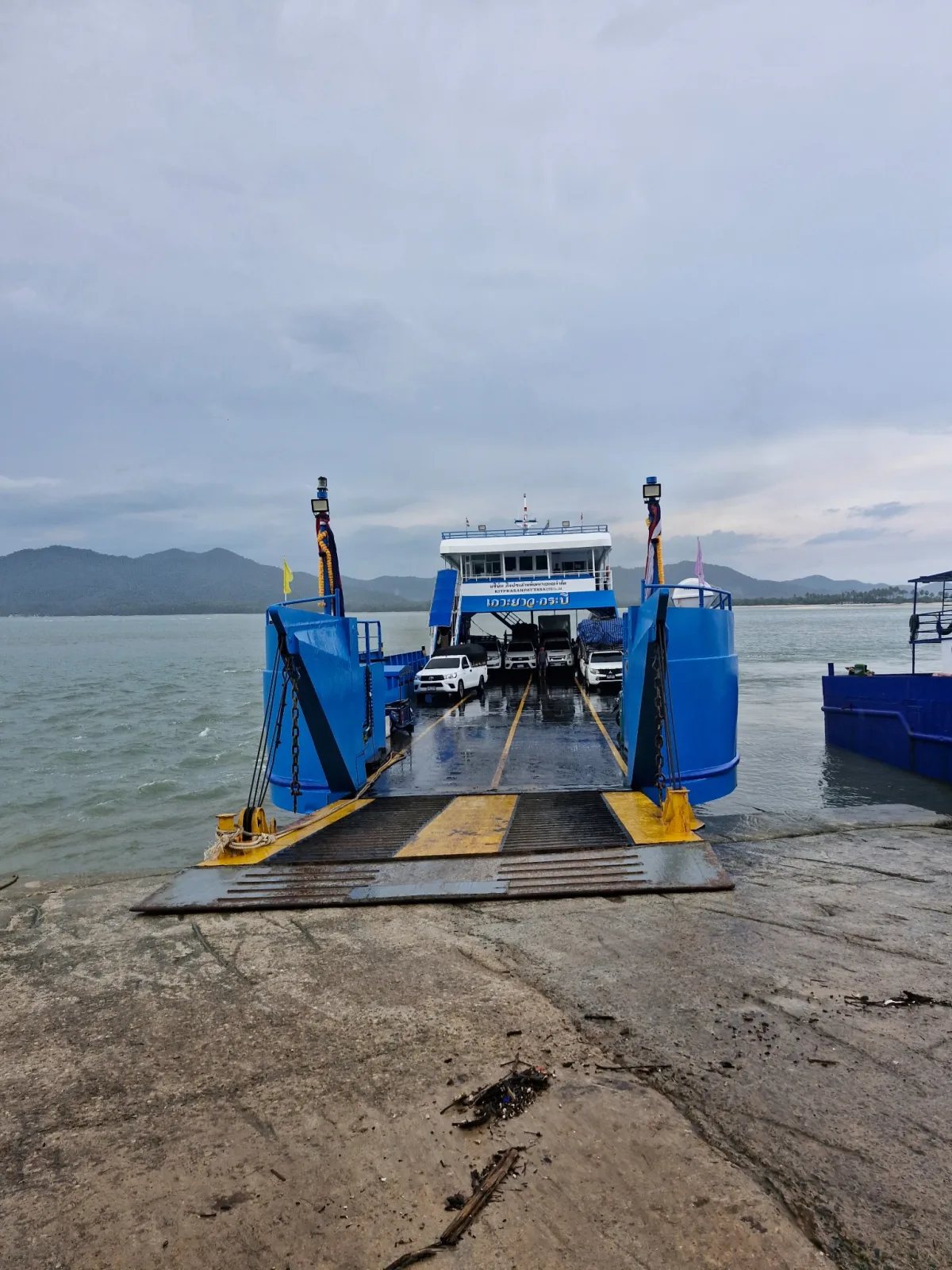
A vehicle ferry operates from Laem Sai, with a boarding ramp and a vehicle deck; a ramp at a pier is not the same as assisted boarding on a longtail, and we do not describe it as an accessible service.
Accommodation: the questions that matter
No property here has accessibility attributes documented by us. That does not mean none could work; it means the questions must be asked one by one, in writing. A useful list:
- Is the entrance step-free, and if not, how many steps are there and is there a handrail?
- Is the bathroom door wide enough for your equipment, and is the shower floor level or raised?
- Is the room on the ground floor, and is the path to it paved or sand and gravel?
- Can staff help with luggage and with a transfer from a vehicle?
- Is there a vehicle that can take a folded chair or a frame?
- What happens during a power cut, and is there a light on the path at night?
A lift is not a guarantee either: it may serve a building whose rooms still have raised thresholds, narrow bathroom doors or no roll-in shower. And this guide recommends no property as accessible. Without a documented, verified description, a recommendation would be a guess dressed up as advice. Ask, get answers in writing, and decide for yourself.
A property that answers precisely is a better bet than one that says “accessible” without detail. The where to stay guide explains the different areas, which is the first decision: a village base removes most daily transport, while a beach base trades convenience for quiet.
Scooters, sidecars and what does not exist
Scooters are the default island vehicle and they are not a mobility solution. The typical rental is a 125cc automatic motorcycle; riding one requires the appropriate licence valid in Thailand and an International Driving Permit where required, and a car-only licence is not enough. Sidecars exist for luggage and passengers, but no adapted vehicle with hand controls is verified here, and we will not point you to one.
That leaves taxis, hotel shuttles, bicycles for those who can use them, and walking for short distances. For many visitors with reduced mobility, the honest answer is that the island works as a place to stay still — one base, one beach, a few short outings — rather than as a place to tour.
Health, emergency and distance
The island has a hospital with emergency access around the clock, basic care and imaging equipment on site. A CT scanner is not confirmed. A serious case may be transferred to Phuket, and that transport can be charged. Emergency numbers are 1669 for rescue and ambulance, 191 for police and 1155 for tourist police.
Plan the medical side before you need it: know where the hospital is relative to your accommodation, keep medication in your hand luggage, and check that your insurance covers what you are planning.
What to confirm before you book
- The exact number of steps at the property, the pier and the boat.
- Whether the bathroom and room layout work for your equipment.
- The vehicle type for transfers, and whether it can carry a folded chair or frame.
- How boarding works at both ends, and what happens if the sea is rough.
- The hospital’s location and the transfer procedure.
Two habits help: photograph the vehicle and the driver’s number, and keep the accommodation’s number on paper as well as in your phone.
Where to go next
Practical transport detail is in getting around and planning without a scooter. The scooter guide covers licensing honestly, and getting there explains the crossings. For beaches, start with the beaches overview and Pasai. Tides decide what is reachable on a given day, and emergency information is worth reading before you travel.